


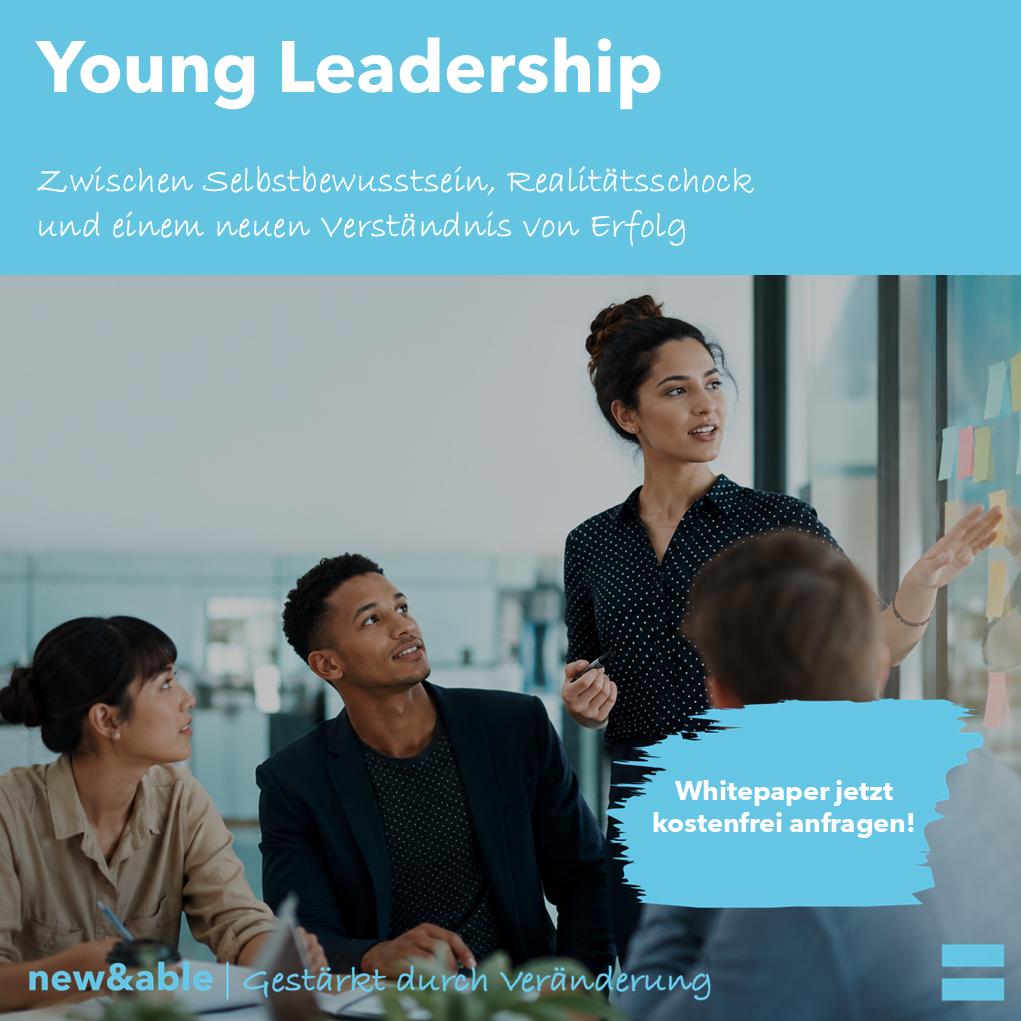
Young leadership is more than just a generational issue
It shows how leadership is currently undergoing a fundamental transformation: Young people are taking on responsibility at an earlier age, bringing new expectations to organizations, and questioning what actually constitutes good leadership today.
This isn’t just about new tools, digital literacy, or modern ways of working. It’s about bigger questions:
What does performance mean in a complex work environment?
How is authority established when position alone is no longer enough?
How can leadership provide direction without simply perpetuating old patterns?
And how can we maintain effectiveness in the long term without accepting constant overload as the norm?
Our new study and accompanying white paper show that Young Leadership does not represent a radical break with existing leadership models. Rather, it involves a reimagining of leadership—one that is more conscious, reflective, and deeply rooted in purpose, trust, creativity, and sustainable impact.
This presents a significant opportunity for organizations. After all, anyone seeking to understand young leaders and emerging talent should look not only at their expectations but also at the tensions they navigate: between self-confidence and doubt, the desire to shape their own path and structural constraints, and the need for speed and the need for reflection.
Young Leadership highlights the fact that sustainable leadership requires more than just new buzzwords. It requires opportunities for growth, transparent decision-making, cultural openness, and a new understanding of performance.
In our free white paper, we provide insights into key findings, common challenges, and concrete implications for organizations.
Please feel free to request the free white paper from Marlon Meierhöfer. We look forward to hearing from you.